The Czech defence industry continues to grow, and companies are gradually becoming involved in international research and innovation consortia. However, they are still able to secure only a small fraction of the funding from European programmes compared with what would correspond to their actual technological potential.
According to experts, the key to success is significantly closer cooperation between the state, the armed forces and the private sector. And, last but not least, academia.
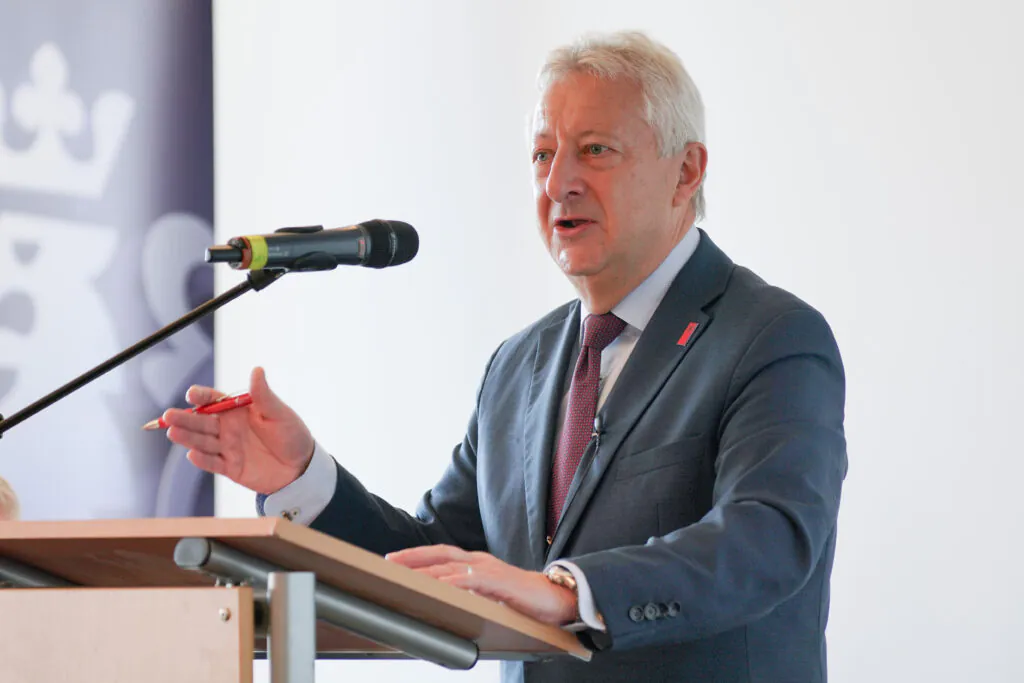
“If we want to be strong and respected, we need to act as one and speak with a coordinated and unified voice in the international arena,” Defence Minister Jaromír Zůna (for SPD) said at the 6th Defence Procurement Conference held on the sidelines of NATO Days in Ostrava.
According to him, the state should use cooperation between the armed forces, the Ministry of Defence, the defence industry and academia to develop innovation and know-how so that all parties are prepared for future demand in both domestic and foreign markets.
Zůna praised the results of the Czech defence industry in both domestic and foreign markets. Over the past few years, exports have increased from CZK 15 billion to CZK 115 billion.
He noted that the ministry is also preparing legislative changes aimed at making it easier for industry and research institutions to test and verify new technologies using Czech military facilities and training areas. According to the minister, limited opportunities for practical testing are currently among the factors slowing down the introduction of new solutions.
The minister said he sees potential, for example, in NATO’s DIANA innovation accelerator. Under rules being introduced in some NATO countries, successful companies may gain more direct access to public procurement. Czech legislation does not currently provide for a similar mechanism, however, and according to Zůna, it will need to be amended.
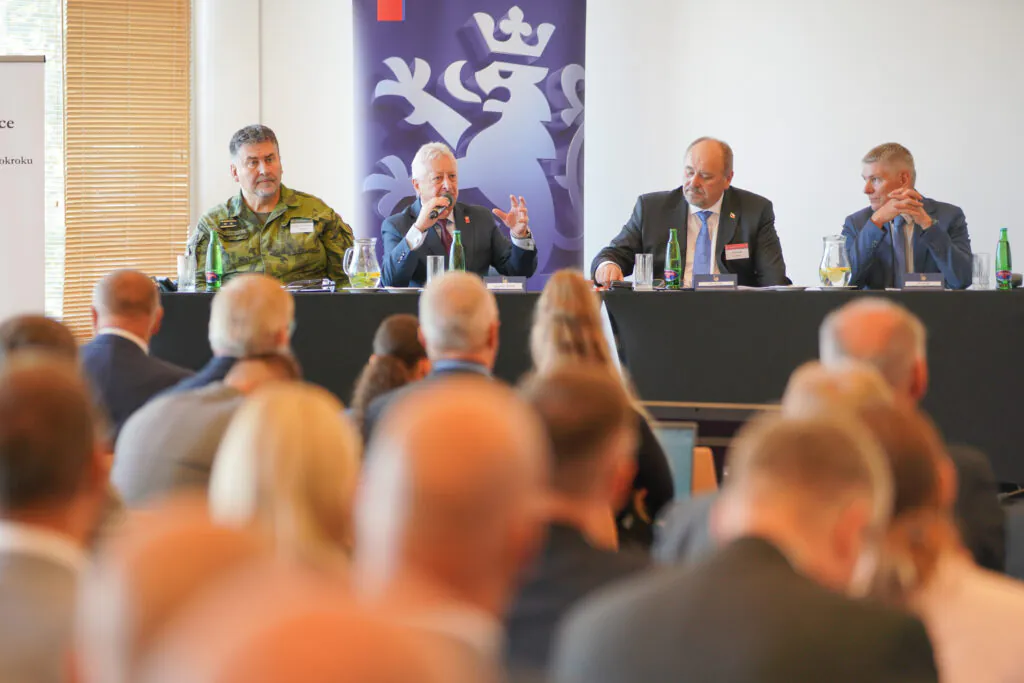
This year again, the Defence Procurement Conference served as an important forum for representatives of the Ministry of Defence, the armed forces, the defence industry, academia and other stakeholders involved in building the country’s defence capabilities. Experts agreed that the Czech defence industry has a number of technologically advanced companies that are already successfully using NATO and European research and development support mechanisms. However, they still secure only a fraction of the funding that their technological potential would warrant.
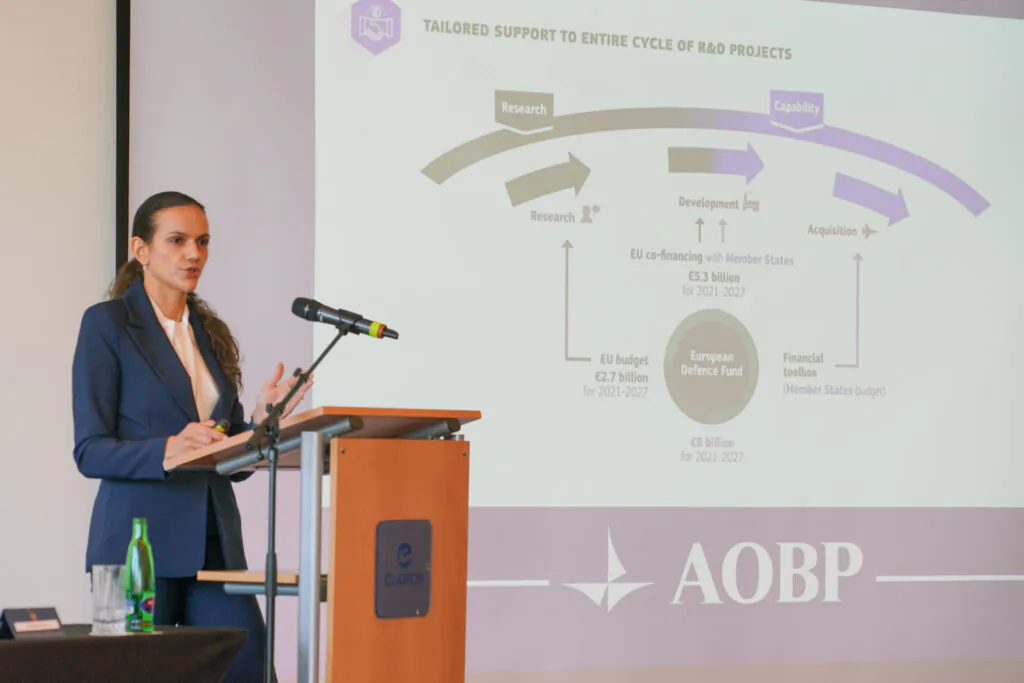
According to Kristýna Helm, Vice-President of the Defence and Security Industry Association (AOBP), the European Defence Fund (EDF) has a budget of approximately €8 billion. Czech entities received only around €19 million from the €4 billion allocated between 2021 and 2024, representing just 0.43%.
“The challenge is not the competitiveness of Czech projects, but their low number and insufficient involvement in international consortia,” Helm stated.
One positive sign is that the Czech company RESPILON is leading an EDF project consortium for the first time. Several companies have also succeeded in NATO DIANA programmes, including Goldilock Secure and Dronetag, while Decent Cybersecurity and L.P.P. holding a.s. recently won a NATO innovation challenge. Nevertheless, according to Helm, the Czech Republic remains among the less successful EU countries in terms of funding secured.
A warning sign is that consortia are currently being formed that will shape the direction of European defence research in the years ahead. If Czech companies fail to get involved in time, they could lose the opportunity to participate in projects funded by future European budgets. Participants agreed that in the coming years, the Czech defence industry could find itself on the margins of key European initiatives and miss out on opportunities under the European Union’s new multiannual financial framework.
At the conference, the Czech Armed Forces presented their main development priorities: the modernisation of the land and air forces, strengthening air defence, the digitalisation of command and control, and the Future Soldier concept. According to senior military officials, significant opportunities for cooperation with industry are also emerging in robotics, unmanned aircraft and unmanned vehicles, sensor technology, simulation and training.
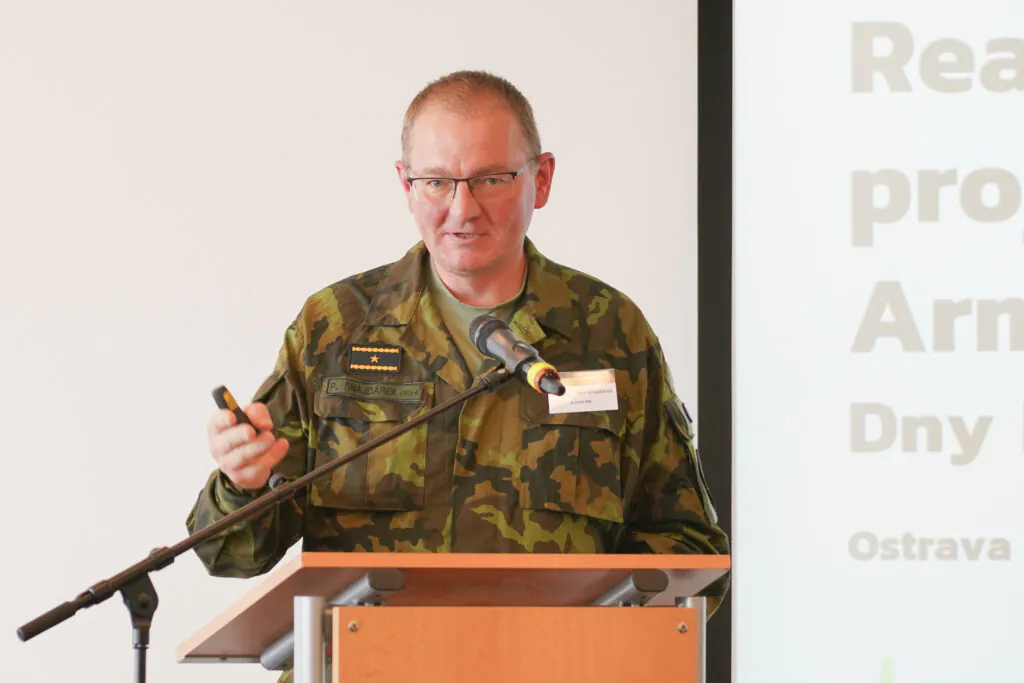
Brigadier General Petr Šnajdárek, Director of the Communications and Information Systems Division, confirmed plans to build a digital core for the armed forces. He stressed that “digitalisation is not merely about transferring existing processes into electronic form, but about fundamentally transforming and modernising them”.
According to Petr Milčický, head of the Force Development Division, the ministry plans to establish an experimental innovation unit within the armed forces, which is intended to significantly accelerate the testing and implementation of innovative technologies in practice. Representatives of the defence industry are also calling for this. At the conference, they called for greater openness and communication from the Ministry of Defence and the armed forces, which would significantly help speed up the implementation of innovations. Companies need to be in contact with the armed forces earlier, understand their future needs and develop technologies with a clear idea of how they will be used in practice.
AOBP President Jiří Hynek presented NATO’s new framework for cooperation with industry – SYNC, which is directly based on timely communication, innovation and resilient supply chains. According to him, the main shift is to view industry as a partner. Industry should be involved already at the planning and development stage of future capabilities.